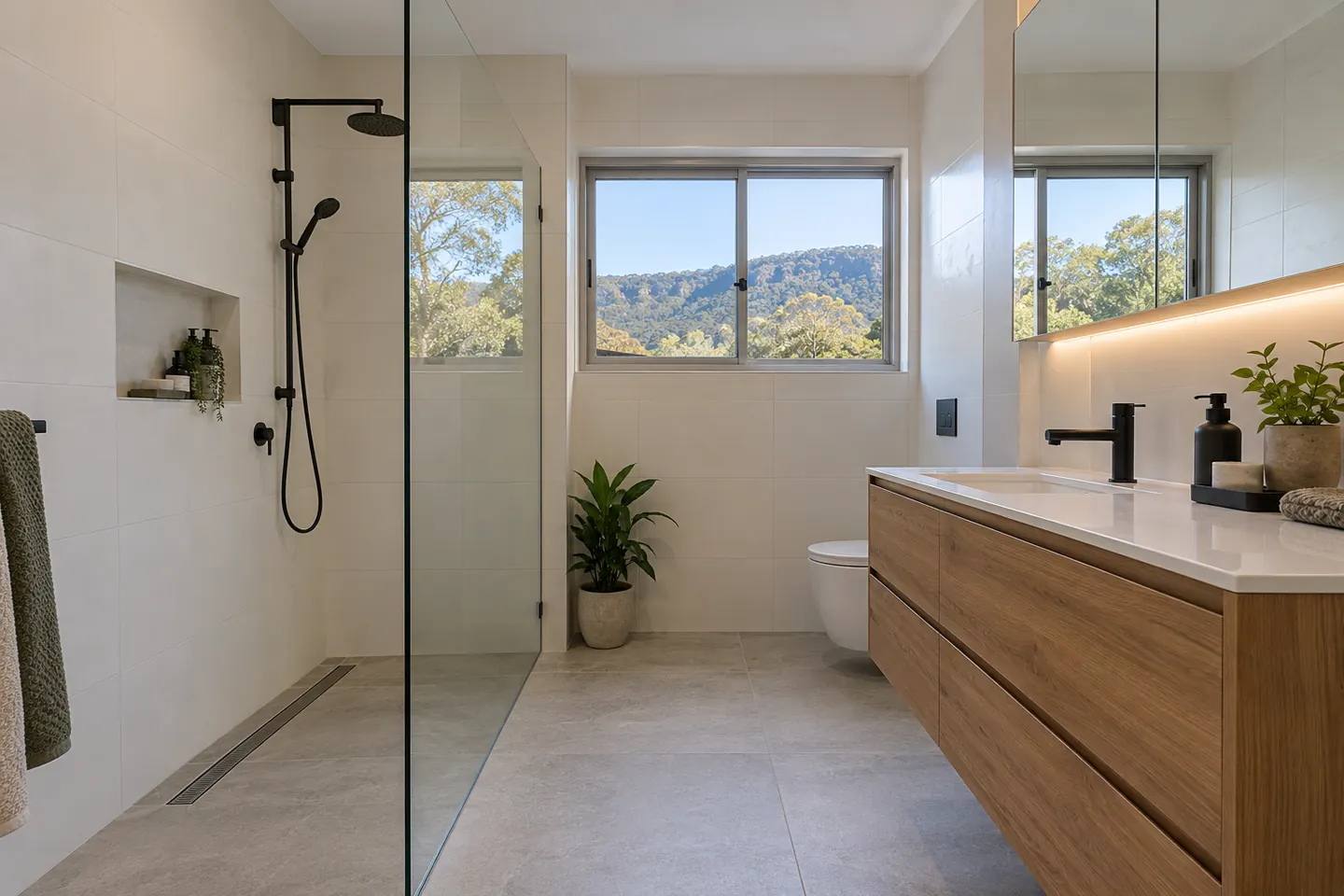
When a full renovation is the right call
Not every tired bathroom needs to be ripped out. If the shower isn't leaking, the floor is solid and it's just looking dated, new tapware, a vanity, a regrout and better lighting might get you most of the way for a lot less money.
A full renovation makes sense when two or three of these are true:
- Water is getting where it shouldn't — soft floor near the shower, swollen skirting, stains on a ceiling or wall on the other side
- The tiles are drummy or cracking, especially on the floor
- Pipes are original, with low pressure or rust in the water
- Mould keeps coming back no matter how often you clean
- The layout doesn't work for the people using it
- There's fibro in the room that you want dealt with
What the job involves
1. Test for asbestos
If the house or the bathroom is from before about 1990, any sheeting gets sampled and tested first. Plenty of Illawarra bathrooms have fibro walls or fibro under the floor. If it's positive, a licensed asbestos removalist takes it out and a clearance is issued before the rest of the job continues.
2. Strip it out
Tiles, the old mortar bed, bath, shower base, vanity, toilet and wall linings come out. This is noisy and dusty for a few days. Once it's bare, you can see what's really going on with the frame and floor.
3. Fix what's found
Rotten joists, termite-damaged bottom plates, a wall out of plumb. Anything like this gets photographed, talked through and fixed under the allowance written into the quote.
4. Rough-in
New water supply and waste pipes, and new wiring for lights, the exhaust fan and any heating. Old galvanised pipe gets replaced while the walls are open. If anything's moving position, it happens here.
5. Sheet and screed
Wet-area board goes on the walls. The floor gets a screed that falls to the waste, so water actually runs away instead of pooling in the corner.
6. Waterproof and wait
A membrane on the floor, up the shower walls and around all the junctions, then time to cure. Humid Illawarra weather can slow this down. It's worth the wait. See waterproofing and tiling.
7. Tile
Floor and walls, with the set-out sorted before the first tile goes on so cuts end up where you won't notice them.
8. Fit-off and handover
Vanity, toilet, tapware, screen, mirror, fan, lights and accessories. Final clean, walk-through, and the waterproofing paperwork handed over.
Getting the design right
Walk-in shower or keep the bath? If nobody's had a bath in years, give the space to a decent walk-in shower. If you've got little kids, or you're planning to sell to a family, a bath still earns its spot.
Think about the next twenty years. A step-free shower, blocking in the walls for grab rails later and a non-slip floor cost next to nothing during a renovation. See accessible bathrooms.
Storage. Drawers in the vanity, a mirror cabinet, a niche in the shower. Most older bathrooms had almost none.
Light. A light at the mirror, not just one in the middle of the ceiling behind your head.
Built for the local weather
Ventilation. A fan sized for the room and ducted outside — not into the roof — with a run-on timer. Under the escarpment, this is the most important thing on the list.
Ceiling. A wet-area lining and paint made for bathrooms.
Grout. Epoxy or a high-performance grout in the shower, and mid-tone colours that don't show every mark.
Fittings near the beach. Quality tapware and stainless hardware in homes close to the water in Thirroul, Corrimal, Towradgi or North Wollongong.
Timber floor or slab?
Timber floors are common in cottages and older homes. They give you more flexibility on layout because pipes can run underneath. They also need a bit more care with waterproofing, because timber moves.
Slabs are common in brick veneer from the seventies onward. They're more forgiving for waterproofing, but moving a waste means cutting concrete.
What your quote should spell out
- Asbestos testing, and how removal would be priced if needed
- An allowance for rot or structural repairs
- Which pipes are being replaced
- Fittings by brand and model
- Tile allowance per square metre
- Waterproofing method and cure time
- Fan model and where it vents
- Waste removal and site protection
- Program in working days
Paying for it
In NSW, a builder can't ask for more than a 10 per cent deposit on residential building work. For jobs over $20,000, home building compensation cover has to be in place before a deposit is requested. After that, payments should line up with finished stages.
Renovation work is carried out in partnership with Coastal Renovation Group, a licensed NSW builder. Licence and insurance details are provided on request. The prices page has 2026 bands and how a job runs walks through the timing.
Call 02 4214 4073 or send the bathroom details through.
Questions people ask before they commit
What does a full bathroom renovation cost in Wollongong?
As a 2026 guide, a main bathroom runs about $21,000 to $35,000. Cottages with fibro linings, rotten floor timbers or long carries up a sloping block sit toward the top of that range or a bit beyond it.
How long does it take?
Around three and a half to five weeks on site, depending on the house. Brick veneer on a slab is usually quicker; an old timber cottage where the floor needs work and asbestos has to come out takes longer.
Can I just re-tile over the old tiles?
It's sometimes done, but it's usually a mistake in an older bathroom. You can't see or fix a failed membrane underneath, the floor gets higher at the door, and if the old tiles let go, the new ones go with them.
Can the toilet or shower be moved?
On a timber floor with room underneath, often without too much fuss. On a slab it means cutting concrete, which costs more. It's worth asking whether the move really improves the room before paying for it.